Salesforce Spring ’26 and the Bold Rise of Autonomous Agents

January 05, 2026
770 Views
Salesforce Spring ’26 and the Bold Rise of Autonomous Agents
Summarize this blog post with:

Salesforce Spring ’26 marks a turning point in how customer relationships are managed. Managing customer relationships has always been about knowing people, predicting what they want, reacting at the appropriate time, and providing helpful interaction. Although AI has been included in CRM discussions for many years, early designs focused more on automation than real intelligence. Most tools supported teams only in predefined, reactive scenarios, limiting their ability to adapt and act proactively.

With the introduction of Agentforce, Salesforce is entering a new stage of AI maturity, one where AI actively participates in business operations rather than merely assisting users
How AI Evolved in Salesforce from Chatbots to Agentforce

Salesforce’s development of AI has been gradual and by design. Early chatbot implementations were built to manage simple use cases such as answering FAQs, routing leads, or opening service tickets. These were efficient tools, but they didn’t offer much flexibility; they were based on scripted logic and limited understanding of context.

The launch of Einstein AI marked a significant shift. Predictive insights, recommendations, and data science-driven intelligence were baked into the Salesforce clouds. Sales teams got forecasting help, marketers could tailor customer journeys, and service teams fixed problems more quickly. However, Einstein still functioned primarily as an advisor, analysing data and suggesting actions while humans remained responsible for execution.

Agentforce moves Salesforce beyond that model.

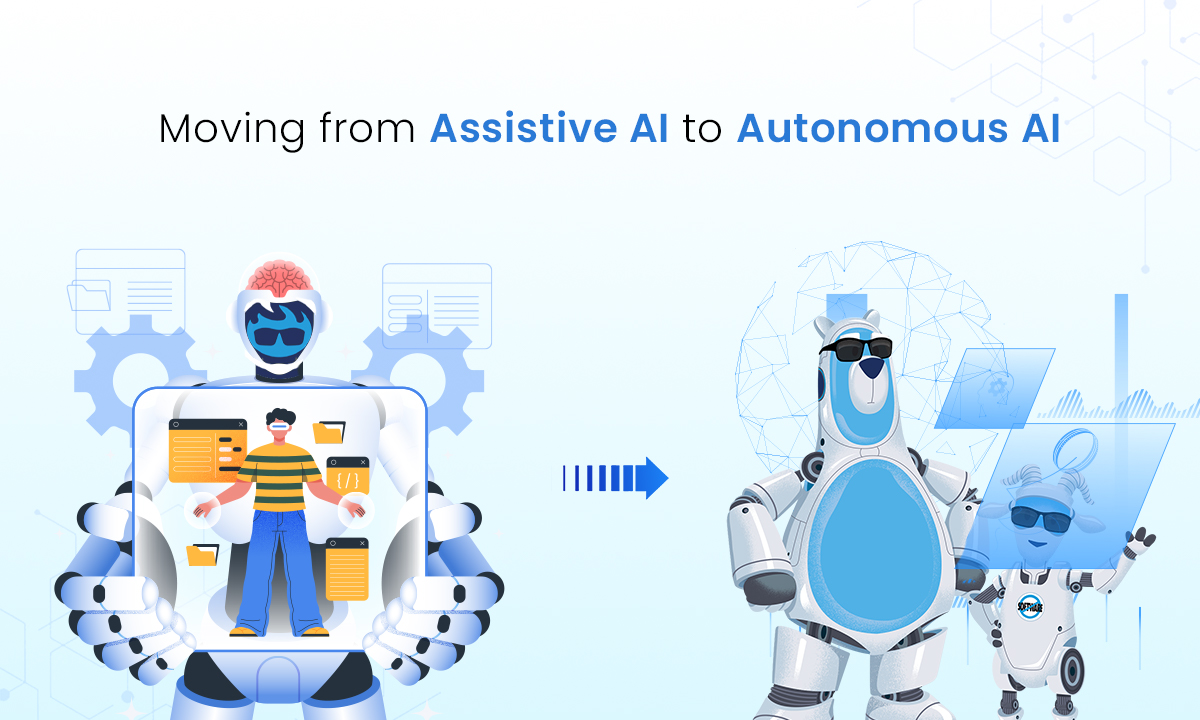
Moving from Assistive AI to Autonomous AI in Salesforce

With Salesforce Spring ’26, Agentforce represents Salesforce’s transition from assistive AI to autonomous AI agents. Rather than waiting for instructions, these agents can identify what needs attention and take action independently within clearly defined business rules.

Key capabilities include,

  • Automatically monitoring customer behaviour and prioritising leads
  • Executing follow-ups, scheduling meetings, and updating CRM records
  • Triggering marketing or service actions in real time
  • Generating contextual content such as emails, summaries, or proposals

Salesforce Spring ’26 and the Rise of Autonomous Agents

How Autonomous AI Agents Work

Autonomous agents are in a class of their own when it comes to bots. They are built on three core components of operations.

Key capabilities include,

  • Context Awareness: Agents monitor data throughout Salesforce, sales activity, service history, customer interactions, and signals of engagement in real-time.
  • Memory and Learning: They keep contextual memory from previous interactions and results, and their performance gets better over time.
  • Decision Logic: The agents consider several potential moves and determine the best next action according to the given goals and priorities of the business.

These functionalities are baked into Sales Cloud, Service Cloud, and Marketing Cloud, so AI agents can run across teams and not just be locked into one workflow.

Real-World Impact Across Business Functions

Agentforce is already reshaping how teams operate across industries.

Key capabilities include,

  • Sales Teams: AI agents automatically manage lead qualification, pipeline updates, and follow-ups. Sales professionals can spend less time on administration and more time advising customers and closing deals.
  • Marketing Teams: Campaigns adapt dynamically based on customer intent and engagement signals. Personalisation happens in real time without constant manual oversight.
  • Customer Service Teams: Routine cases can be resolved without an agent, allowing agents to focus on complicated cases and high-priority customers that need empathy and judgment.

Faster execution, increased accuracy, and uniform customer experience are the benefits businesses realise across the board.

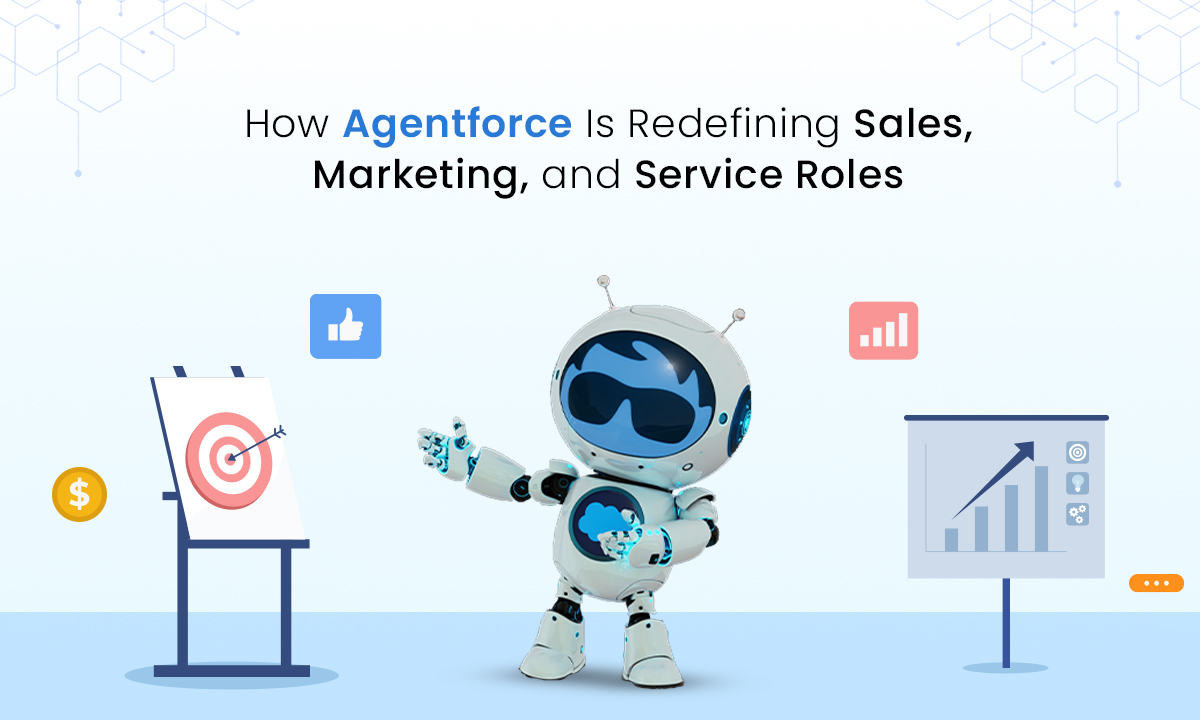
How Agentforce Is Redefining Sales, Marketing, and Service Roles

  • The impact of Agentforce extends beyond efficiency gains; it changes how work is distributed.
  • Sales professionals shift toward relationship-building rather than data entry.
  • Marketers focus on strategy and creativity while AI manages execution.
  • Support agents dedicate their expertise to meaningful interactions instead of repetitive tasks.

This shift in responsibilities enables organisations to increase efficiency and decrease employee burnout.

Salesforce Spring ’26 and the Rise of Autonomous Agents

Data, Trust, and Responsible AI

Salesforce continues to focus on data integrity and ethical AI. Data management investments, such as the recent acquisition of Informatica, enhance the flow of information into AI systems, allowing decisions to be made on clean and consolidated data.
At the same time, Salesforce stresses transparency, governance and control. Organisations retain visibility into the operations of AI agents to ensure they are compliant with internal and external policy and regulatory requirements.

The Importance of Agentforce in Modern CRM

The question for businesses is different now. Instead of asking if AI can help teams, the question now is how much responsibility can be delegated to it before it becomes a trust or quality issue.

Agentforce demonstrates that AI can move beyond recommendations to meaningful action. By adopting autonomous AI agents, organisations can:

  • Reduce operational overhead
  • Improve speed and consistency
  • Deliver more personalised customer experiences
  • Stay competitive in an increasingly AI-driven market

Final Thoughts

With Salesforce Spring ’26, Salesforce Agentforce opens a new chapter in the evolution of CRM. From rule-based automation to intelligent, autonomous agents, Salesforce is reshaping how businesses interact with customers and manage internal processes.
Agentforce isn’t just a feature; it’s a strategic move toward a more autonomous, scalable, and intelligent CRM system environment. Organisations that adopt this transformation will be best placed to evolve, flourish, and lead the future of customer engagement.

How useful was this post?

Click on a star to rate it!

Average rating 0 / 5. Vote count: 0

No votes so far! Be the first to rate this post.

Written by

Mohit Bansal

Salesforce Technical Architect | Lead | Salesforce Lightning & Integrations Expert | Pardot | 5X Salesforce Certified | App Publisher | Blogger

Get the latest tips, news, updates, advice, inspiration, and more….

Contributor of the month
contributor
Mykyta Lovygin

SFCC Developer | SFCC Technical Architect | Salesforce Consultant | Salesforce Developer | Salesforce Architect |

...
Categories
...
Boost Your Brand's Visibility

Want to promote your products/services in front of more customers?

...

Leave a Reply

Your email address will not be published. Required fields are marked *