Before diving into analysis, it’s worth verifying the key claims circulating in the market and financial press about Salesforce’s current situation.
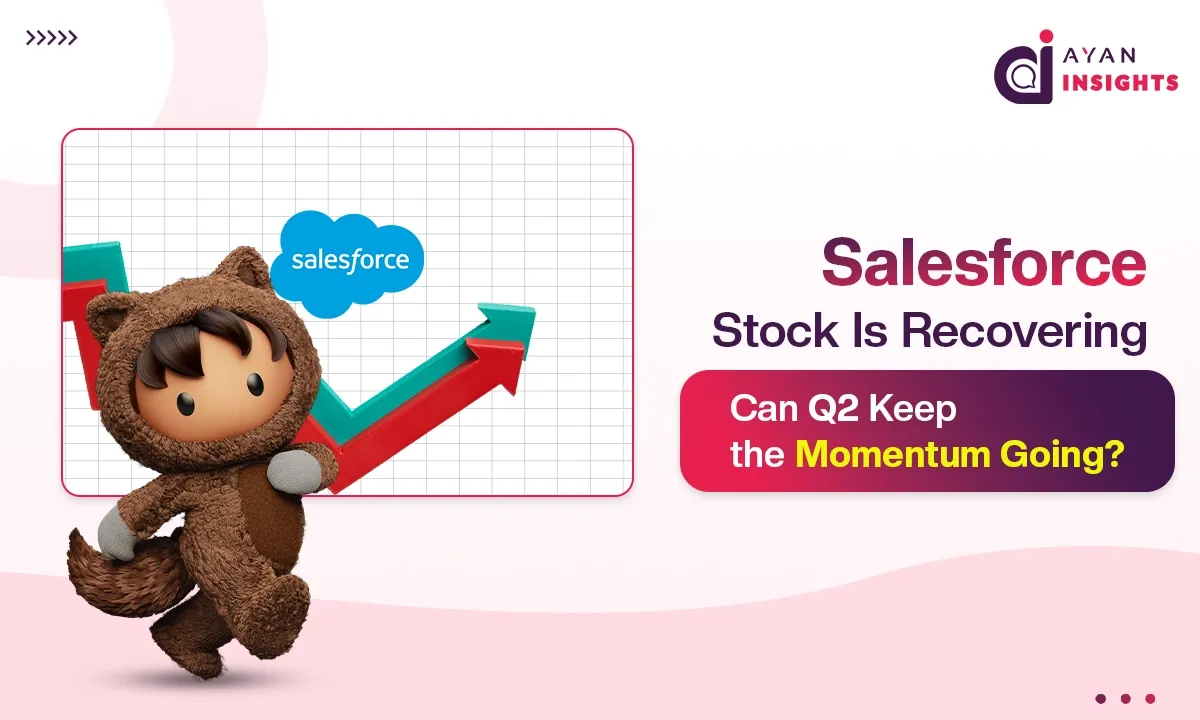
The stock hitting a three-year low at $157.74 — Verified. Investing.com confirms CRM traded within a day range of $154.23 to $161.43 on June 17, with the 52-week low at $154.23. The February 2023 reference aligns with publicly available price history.
The stock dropped 25% in one year — Verified. Multiple financial outlets and Salesforce’s own earnings communications confirm this figure, making CRM one of the worst-performing Dow components of 2026.
Agentforce has surpassed $1 billion ARR — Verified, and actually an understatement. Official Q1 FY27 results filed with the SEC on May 27, 2026 show Agentforce ARR at $1.2 billion, up 205% year-over-year.
Salesforce acquired Fin (formerly Intercom) for $3.6 billion, adding 30,000 AI customers — Verified. Salesforce’s official press release dated June 15, 2026 confirms every detail, including the deal value, customer count, and Fin’s proprietary Apex AI model.
Revenue growth is within double digits — Verified. Q1 FY27 revenue of $11.13 billion beat the Wall Street consensus of $11.05 billion. Non-GAAP earnings per share of $3.88 beat estimates by approximately 24%.
The P/E ratio sits at approximately 18.72 — Verified via MacroTrends. The forward P/E is even lower, around 13.6 times earnings, compared to the S&P 500 software industry average of approximately 27 times.
Palantir’s P/E at approximately 149 times as a comparison — Directionally accurate. Palantir trades at extreme growth multiples and the comparison makes a legitimate point: investors pay far higher multiples for companies they believe are pure AI growth stories.
Analyst sentiment toward application software is particularly weak — Verified. Simply Wall St cut Salesforce’s fair value estimate from $317.21 to $255.28, a cut of nearly 20%, citing execution risks and questions around AI monetization. RBC Capital Markets and Bank of America have both issued cautious notes in June 2026.
The Fin acquisition spooked investors — Verified. This was Salesforce’s fifth acquisition of the year, and the stock declined sharply in the days following the announcement, even though the deal was strategically sound.
OpenAI and Anthropic IPOs affecting investor capital allocation — Partially accurate. Both companies have moved toward public markets in 2026, drawing capital toward pure-play AI. However, this is one contributing factor among several, not the primary driver of the decline.
Overall verdict: The facts on the ground are largely accurate and well-grounded in verified data. The key tensions are real — but they are being read in isolation rather than within the broader market context that explains much of what is happening.