There’s a common belief that to make an AI assistant smarter, you just need to feed it more data.
More customer records, order histories, support tickets, product usage stats, and endless files.
That sounds logical at first. More information should mean better answers, right?
In reality, giving an AI too much raw data often creates confusion rather than clarity.
An AI doesn’t need every single detail at once. It just needs the right context for the specific task at hand.
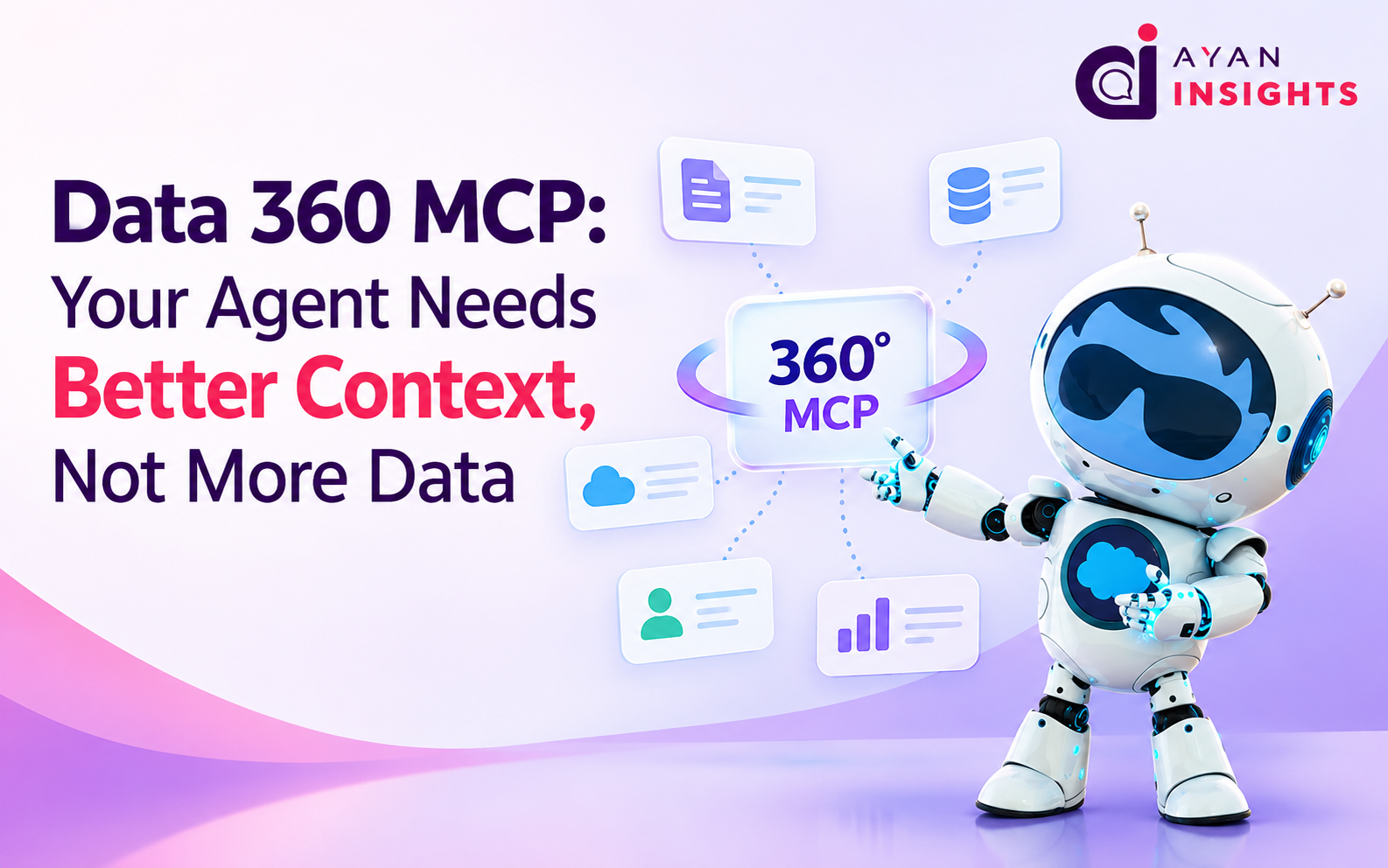
This is why Data 360 MCP is such a helpful tool. It focuses on organising and delivering trusted context, so AI tools can work cleanly and accurately.
Most businesses already have plenty of information scattered across different sales, support, billing, and analytics systems.
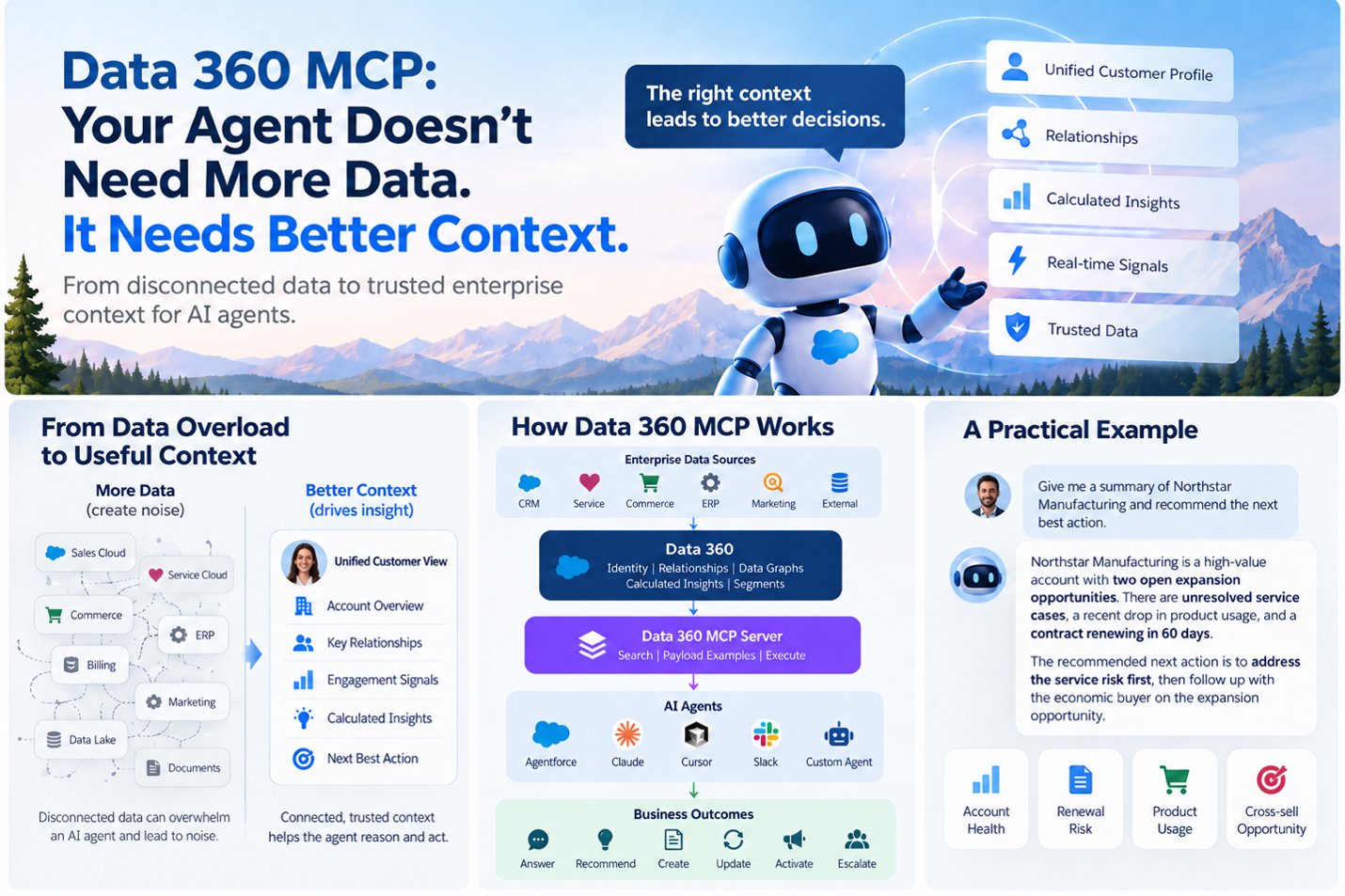
For example, a customer might have open sales deals in one tool, pending orders in another, open support tickets in a third, and usage activity tracked elsewhere.
If someone asks the AI:
What Is Salesforce Service Cloud?
The AI doesn’t need a massive list of raw records. It needs a clear overview of where things stand and what key points matter right now.
That is the key difference between raw data and helpful context.
Raw data gives you separate pieces of information: open deals, delayed shipments, unresolved tickets, lower usage, and an upcoming renewal date.
Context connects those pieces into a clear story:
“This customer is up for renewal soon, but product usage has dropped, and they have open support issues. Resolve the support tickets first before trying to expand the account.”
That is the kind of practical insight people actually need.
Not endless spreadsheet rows.
Not dense technical output.
Not overwhelming detail.
AI needs structured, relevant context so it can provide useful recommendations.
Data 360 helps bring these different customer details together into one coherent view. Through the Data 360 MCP Server, this structured context is shared smoothly with AI tools.
Instead of overwhelming the AI with dozens of complex options, the Data 360 MCP Server organises information simply so the AI can find what it needs, understand it easily, and act on it.
Giving an AI tool too many choices or too much clutter makes it less reliable. It might pick the wrong option or miss the main question.
The goal isn’t to share everything at once, but to provide clean, relevant, and well-structured information that helps AI deliver clear and accurate answers.
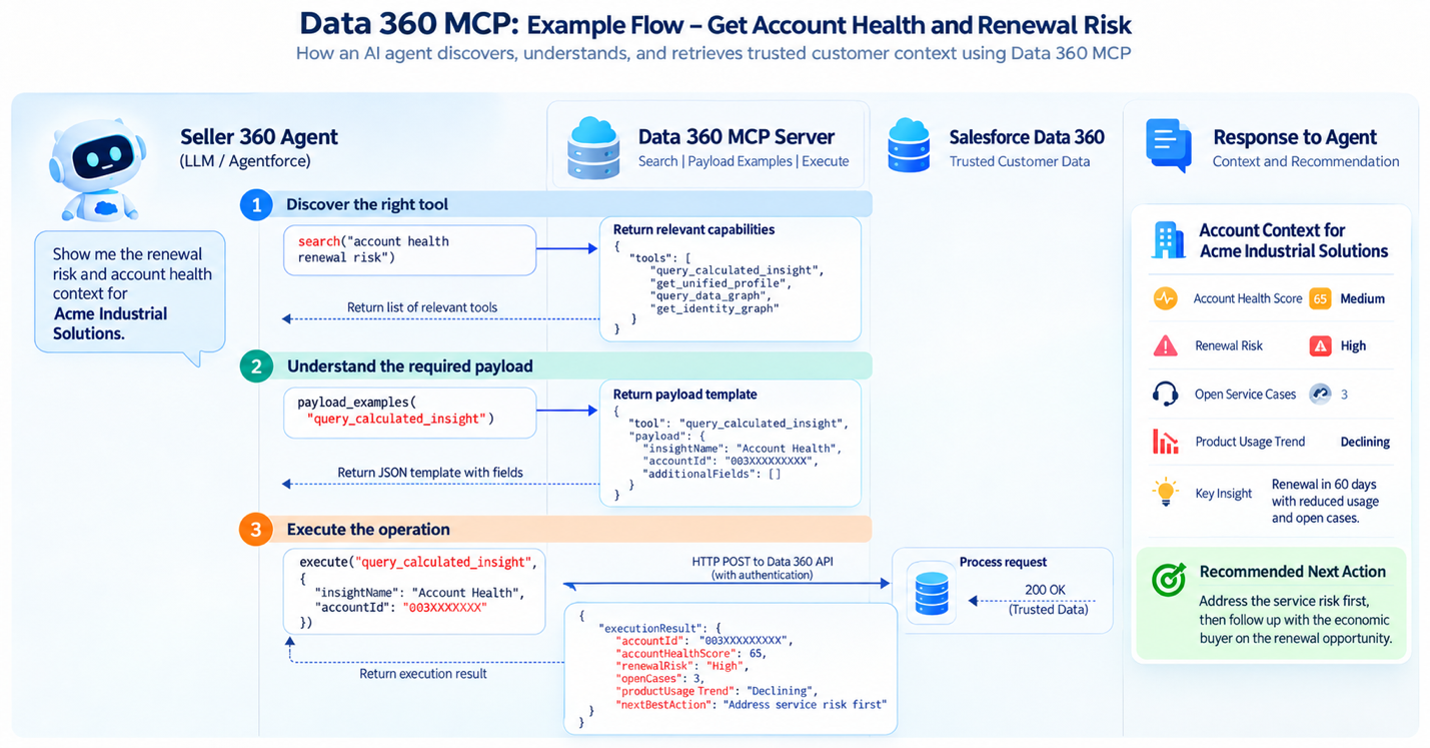
For example: Sales tools hold deals, ERP systems handle orders, and data warehouses store metrics. But an AI tool doesn’t need to dig through all of them directly. Instead, it needs a layer that brings the right information together and makes it easy to understand. This layer doesn’t replace existing systems – it just translates key details so the AI can respond quickly and accurately.
Here is how the process works in simple terms:
- Business systems connect to Data 360.
- Data 360 organises key customer signals and insights.
- Data 360 MCP provides this context to AI assistants.
- AI assistants use this information to answer questions, make recommendations, or suggest next steps.
- Safety controls ensure data is handled securely and appropriately.
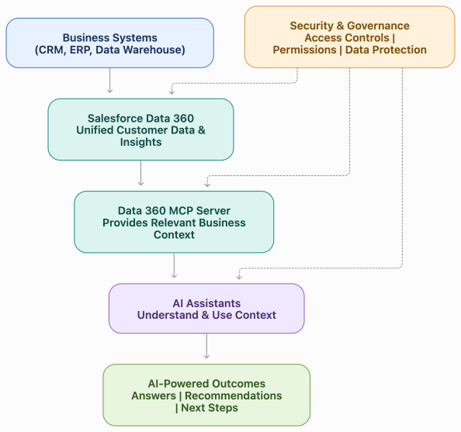
This approach is much more effective than giving an AI unlimited data access and hoping for the best.
The future of enterprise AI isn’t about collecting the most data. It’s about giving AI tools the right context at the right time in a safe, controlled way.
For more details, check out the following resources from Salesforce:
Introducing the Data 360 MCP Server (Developer Preview)
Data 360 MCP Server GitHub Repository