For 2025 much of the business world was talking about the potential of AI. Businesses experimented, conducted pilots, and tested large language models. But to many companies, AI remained a powerful engine without a steering wheel.
This quarter marked a clear shift.
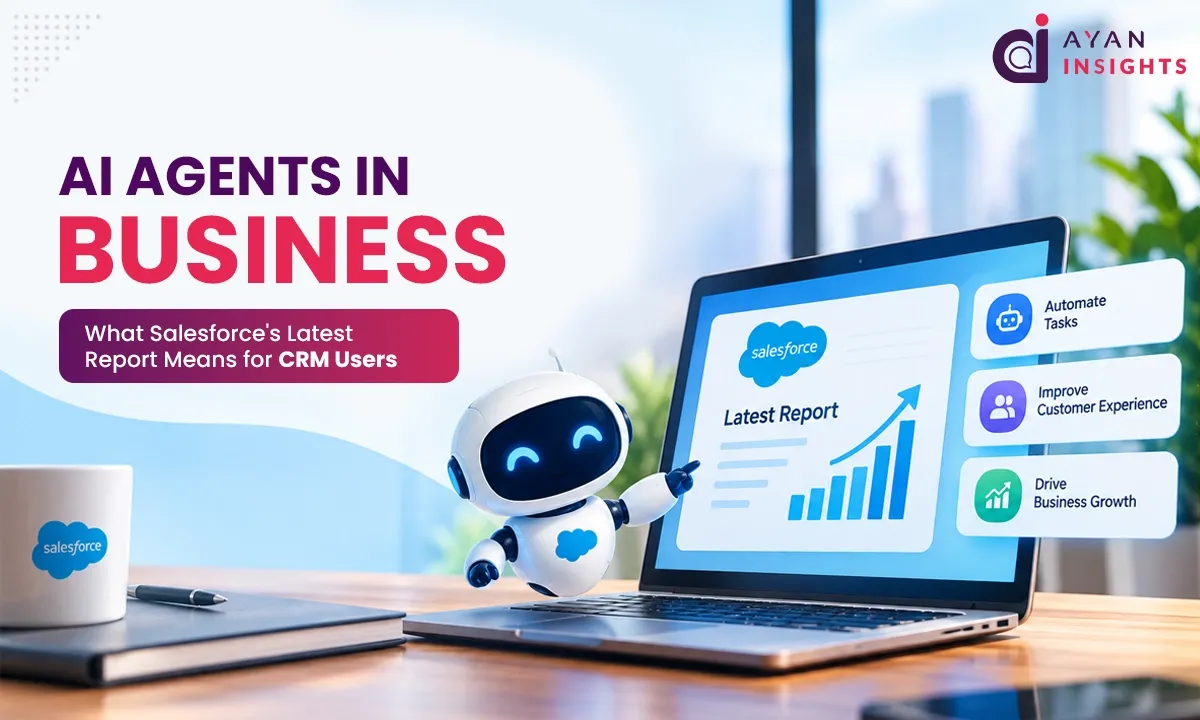
Salesforce used FY26 Q4 to move from experimentation to execution. Rather than treating AI as a feature, the company instead invested in building the infrastructure, governance and orchestration to enable autonomous AI agents to work safely at scale.
The result? A transition from AI tools that assist, to AI agents that act.
Let’s break down what happened this quarter, across products, partnerships, investments, and internal transformation and why it matters.
From AI Experiments to Autonomous Agents
There’s a big difference between a chatbot that answers questions and an AI agent that can complete tasks independently within business systems.
The challenge enterprises have faced isn’t access to models, it’s turning raw AI capability into something trusted, secure, and integrated into real workflows.
This quarter focused on solving that “last mile” problem.
Salesforce also extended Agentforce 360, its AI agent orchestration across business processes, and deepened integrations with strategic partners including Google, AWS, and Anthropic. Rather than separate intelligence, Salesforce is building an execution layer, one where AI agents function within governed environments, utilizing trusted business information.
That difference is what transforms AI from experimental technology into measurable business growth.
Major Product Launches and Expansions
The fourth quarter of FY26 was filled with significant product launches.They were not superficial updates but represented significant expansions of how AI works across industry and ecosystem.
Agentforce Nonprofit: AI for Mission-Driven Organisations
Salesforce began the quarter by launching Agentforce Nonprofit.
It’s Common for Nonprofit Staff to Spend more Time on Administration than Mission Work. Fundraising administration, donor communication, reporting, and volunteer management can be labor intensive.
Agentforce Nonprofit introduces AI agents designed specifically to:
- Support fundraising campaigns
- Manage volunteer programs
- Assist with donor communication
- Help streamline program operations
The impact is simple but powerful: hundreds of hours saved. Staff are able to reallocate time from manual processes to engaging with the community and delivering services.
For non-profit organizations with limited resources, such an increase in productivity can potentially multiply the impact of their mission.
Agentforce 360 for AWS: Enterprise-Scale Deployment
Salesforce extended its partnership with Amazon Web Services by bringing Agentforce 360 to AWS infrastructure.
Running fully on AWS allows enterprises to:
- Access foundation models via Amazon Bedrock
- Deploy AI agents securely at global scale
- Consolidate AI spending across platforms
- Simplify procurement and billing
Many enterprises already rely heavily on AWS. Bringing Agentforce directly into that ecosystem reduces friction and accelerates adoption.
The goal here is not just flexibility, it’s scale with governance.
Opening Agentforce 360 to ISVs
One of the most significant strategic moves this quarter was opening Agentforce 360 to independent software vendors.
Previously, certain AI capabilities were primarily limited to Salesforce’s own product ecosystem. Now, ISVs can,
- Build their own AI agents
- Customize and extend core capabilities
- Commercially distribute AI-powered applications
Salesforce handles the infrastructure security, and scalability, while partners bring industry expertise and innovation.
This expansion dramatically increases the ecosystem’s creative potential. It lowers the barrier to building enterprise-grade AI applications.
Agentforce Sales App Inside ChatGPT
In another major step, Salesforce introduced an Agentforce Sales App within ChatGPT.
This integration allows sales professionals to:
- Ask business questions using natural language
- Update Salesforce records
- Prioritise deals
- Plan account strategies
All directly from within ChatGPT.
What makes this different is the governance layer. The Trust Layer continues to protect Salesforce’s own proprietary data, and the security standards are the same for both sides.
Instead of copying and pasting between systems, sales teams can operate within a single conversational interface.
Slackbot as an Intelligent Work Companion
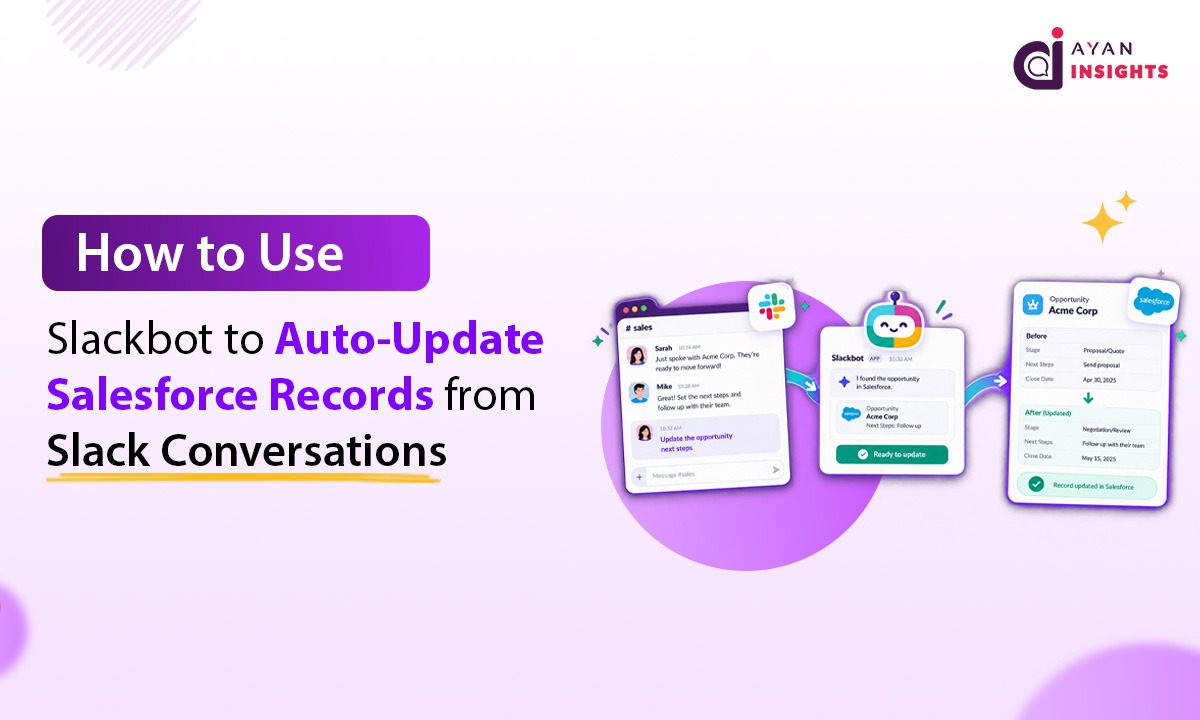
Slackbot has evolved from a simple assistant into a fully integrated employee agent.
The new Slackbot understands how teams work, how projects move forward, and what information employees need. It can:
- Finding answers quickly
- Drafting content
- Organising tasks
- Scheduling meetings
- Coordinate across systems
Slackbot also works alongside specialized Agentforce agents, orchestrating workflows behind the scenes.
The benefit? Employees move from building their search query to executing a command, all without leaving Slack.
Expanding the AI Ecosystem
Salesforce also enhanced its integration with external platforms, signaling a commitment toward being open.
Support for Google’s Universal Commerce Protocol
Salesforce and Google expanded their partnership to support Google’s Universal Commerce Protocol (UCP).
This allows merchants using Agentforce Commerce to,
- Connect directly to AI shopping experiences
- Enable native checkout within Google’s AI environments
- Reach customers at the exact moment of intent
As consumer AI experiences grow, this integration helps retailers meet shoppers wherever discovery happens.
MuleSoft Agent Scanners
Within MuleSoft’s Agent Fabric, Salesforce introduced Agent Scanners, tools that automatically detect and catalog AI agents across platforms such as:
- Salesforce Agentforce
- Amazon Bedrock
- Google Vertex AI
These scanners identify capabilities, data access permissions, and underlying language models. They centralize agent visibility into a single registry.
For enterprises managing multiple AI systems, visibility and governance are critical. This update reinforces control and transparency.
Anthropic Integrations
Salesforce also deepened collaboration with Anthropic.
Bi-directional integrations now allow customers to:
- Bring Salesforce context directly into Claude
- Use AI outputs inside Salesforce workflows
- Maintain governance and security controls
Additionally, new Slack connectors for Claude Cowork enable teams to draft content, collaborate, and share work seamlessly.
These integrations reinforce Salesforce’s strategy: AI should not operate in isolation. It should move fluidly across tools while remaining governed.
Customer Zero
Salesforce Using Its Own AI
Salesforce continues to test and refine its AI tools internally as “Customer Zero.”
This approach ensures that the platform evolves based on real operational use.
The numbers from this year are impressive,
- Agentforce in Slack saved over 500,000 employee hours
- Engagement Agent supported more than 310,000 leads
- Service Agent handled over 2.8 million support requests
- Slackbot increased productivity for more than 80,000 employees
These aren’t projections, they’re operational results.
Using its own tools allows Salesforce to identify friction points, improve usability, and accelerate customer-ready innovation.
Building AI Fluency Across the Workforce
Technology alone isn’t enough. People must know how to use it confidently.
This is the reason that Salesforce launched its AI Fluency Playbook, a hands-on guide to enable companies to get their workforce ready for working with AI.
Built from Salesforce’s own transformation journey, the playbook outlines three pillars:
- Engagement
- Activation
- Expertise
Over the past year, Salesforce increased AI readiness among employees to 85% an 18% improvement year over year.
This highlights an important lesson: AI success requires both tools and cultural readiness.
Strategic Investments and Acquisitions
Salesforce Ventures
Salesforce Ventures completed deployment of its $1 billion AI fund in FY26.
Q4 investments were made in companies developing both foundational AI technologies as well as enterprise-grade solutions.
Going forward to FY27, Salesforce Ventures is targeting founders building the next wave of AI enterprise solutions to support them.
This indicates a long-term commitment rather than short-term testing.
EMBERPOINT: Applying Technology to Wildfire Prevention
Salesforce also joined Lockheed Martin, PG&E, and Wells Fargo to launch EMBERPOINT, a new venture focused on wildfire detection and prevention.The program is designed to make leading wildfire technologies available to agencies and utilities at no development cost.
Demonstrations are targeted for 2026.
This move shows how enterprise technology companies can contribute to public safety and environmental resilience.
Strategic Acquisitions to Strengthen Agentforce
Salesforce announced agreements to acquire three companies that extend its AI capabilities:
- Qualified: A leader in agentic AI marketing solutions. This acquisition will enable autonomous marketing agents that generate pipeline and support revenue growth.
- Cimulate: An AI-powered commerce and product discovery platform. This strengthens Agentforce Commerce by improving search, personalization, and conversational shopping.
- Momentum: A conversational insights and revenue orchestration platform. This expands the ability of Agentforce 360 and Slackbot to analyze voice and video interactions and apply insights to workflows.
Each acquisition supports the same vision: intelligent agents embedded directly into business processes.
The Bigger Picture: Becoming an Agentic Enterprise
Across all these updates, a consistent theme emerges.
Salesforce is building toward what it calls the “Agentic Enterprise”, an organization where humans and AI agents collaborate seamlessly.
Instead of employees navigating multiple systems, AI coordinates work across them. Instead of static reports, agents act in real time. Instead of manual tasks, workflows become autonomous.
This is not about replacing people. It’s about removing friction and unlocking productivity.
Final Thoughts
FY26 Q4 was not just another quarterly update. It marked a shift from AI possibility to AI production.
Salesforce:
- Expanded Agentforce across industries
- Opened its ecosystem to partners
- Deepened integrations with AWS, Google, and Anthropic
- Deployed AI internally at measurable scale
- Invested heavily in the future of AI innovation
The discussion on AI is evolving. It’s not a question of whether companies will use AI anymore, but rather how well they can execute on using it.
This quarter shows Salesforce positioning itself not just as a CRM leader, but as a platform for secure, governed, autonomous enterprise execution.
And that may define the next era of business technology.
Explore the full official release here: Salesforce