Salesforce DevOps Center vs Azure DevOps: Which Is Better?

June 23, 2026
11 Views
Salesforce DevOps Center vs Azure DevOps: Which Is Better?

In the previous blog, we went through Work Items and Change Tracking in Salesforce DevOps Center — specifically how it tracks metadata changes automatically and links them to your development tasks.

Now let’s talk about something that causes real headaches for Salesforce teams — deployments.

Managing releases efficiently isn’t optional anymore. It directly affects how fast your team delivers. Many organizations have been using Microsoft Azure DevOps for this, and it works — but Salesforce has its own native tool now, DevOps Center, built ground-up for Salesforce development. Not adapted. Built.

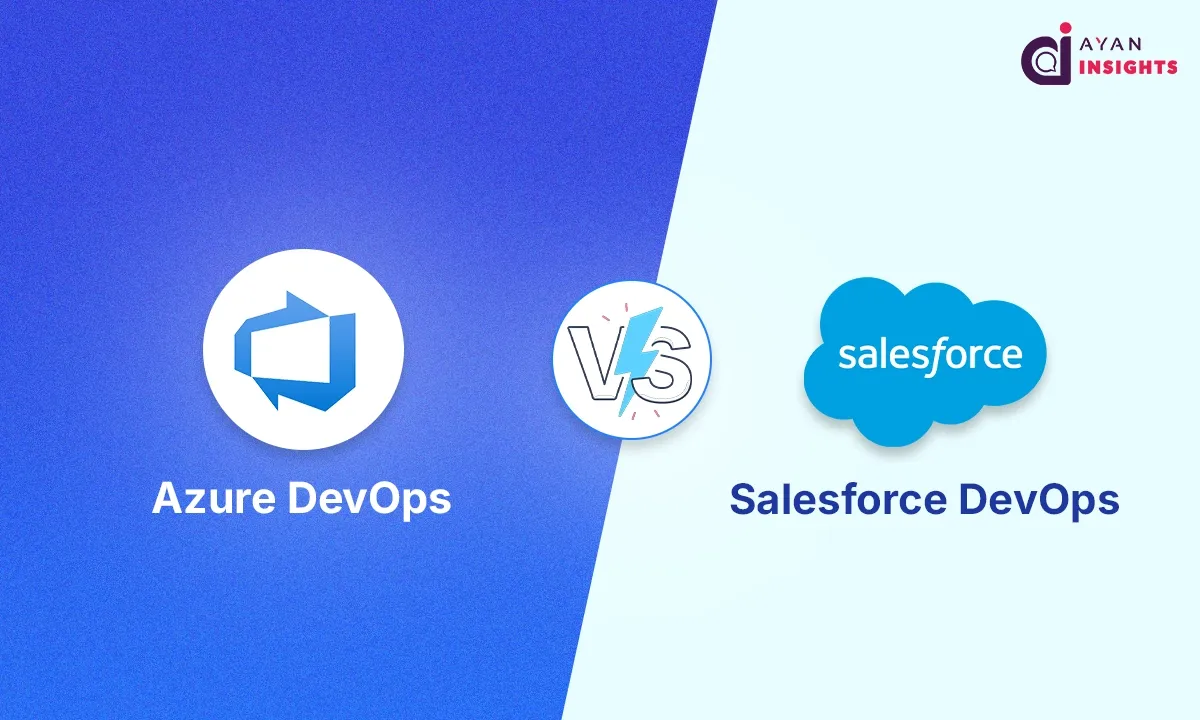
Both platforms handle deployments, version control, and releases. But for Salesforce work specifically? The difference becomes obvious pretty quickly. Let’s break it down.

What is Salesforce DevOps Center?

Salesforce DevOps Center is a release management tool that lives natively inside Salesforce — made for Salesforce developers and admins, not for generic software teams.

With it, your team can:

  • Track changes as they happen
  • Manage and push deployments
  • Connect directly with Git repositories
  • Set up and run pipelines
  • Automate your release process end to end
The big deal here is that it’s not a third-party integration. It’s Salesforce’s own product, designed around how Salesforce teams actually operate.

What is Azure DevOps?

Azure DevOps is Microsoft’s DevOps platform — general purpose, widely used, genuinely powerful. It covers:

  • Repositories
  • CI/CD pipelines
  • Boards
  • Test plans
  • Artifact management

Works great for .NET, Java, Python — basically anything in the Microsoft or open-source stack. The problem? Salesforce wasn’t really part of the picture when it was designed. So getting it to work with Salesforce deployments means extra configuration, custom scripts, and someone on the team who knows both worlds well enough to hold it together.

Why Work Items are Important?

Feature Salesforce DevOps Center Azure DevOps
Salesforce Native Support Fully native Requires setup and customization
User Friendly Easy for Admins & Developers More technical
Pipeline Management Built specifically for Salesforce Generic CI/CD pipelines
Deployment Setup Simple and guided Requires YAML/configuration
Salesforce Metadata Handling Native understanding Manual handling required
Learning Curve Easy Medium to High
Git Integration Direct GitHub integration Supports Git but needs configuration
Change Tracking Salesforce-focused Generic tracking
Maintenance Less maintenance Higher maintenance
Best For Salesforce Teams Multi-technology environments

Why DevOps Center Works Better for Salesforce Projects

1. Native Salesforce Experience

This one’s straightforward. DevOps Center was made by Salesforce, for Salesforce. There’s no translation layer, no workaround scripts, no “okay now how do we make this work with Salesforce metadata” conversations. It just fits — because the people who built it already knew the metadata model, the deployment quirks, all of it.

Azure DevOps doesn’t have that context. You have to bring it yourself.

2. Setup That Doesn’t Take Forever

Anyone who’s set up Azure DevOps for Salesforce knows how long it takes. You’re installing Salesforce CLI, writing YAML pipelines, figuring out authentication, maintaining deployment scripts — and that’s before you’ve pushed a single change to production. DevOps Center’s guided UI cuts through most of that. Teams get up and running faster, with far fewer “why isn’t this working” moments.

3. Admins Can Actually Use It

This is probably the most underrated advantage. Salesforce projects almost always have admins and developers working together — but Azure DevOps was really designed with developers in mind. Admins, functional consultants, business analysts? They often struggle with it. DevOps Center’s visual pipeline interface is something everyone on a Salesforce team can actually navigate and use, not just the technical folks.

4. It Understands Salesforce Metadata

Salesforce metadata is its own beast — profiles, permission sets, flows, custom objects. DevOps Center handles this natively. Azure DevOps doesn’t. Teams using Azure for Salesforce deployments usually end up writing custom scripts just to handle metadata correctly, and those scripts break. Often at the worst times.

5. Maintenance Doesn’t Become a Part-Time Job

Azure DevOps pipelines need babysitting. Scripts need updating, auth tokens expire, configurations drift after sandbox refreshes. With DevOps Center, a lot of that maintenance burden just… disappears. Salesforce manages the platform, so your team isn’t constantly patching the deployment tooling instead of shipping features.

6. New Team Members Get Productive Faster

Because DevOps Center uses Salesforce’s own UI patterns and terminology, onboarding is much quicker. A Salesforce admin or junior developer can get comfortable with it without needing a crash course in DevOps tooling. That’s a real advantage for smaller teams especially, where nobody has time to train people on two different platforms.

When DevOps Center is the Right Call

For teams that live and breathe Salesforce, DevOps Center just makes more sense — simpler setup, native integration, cleaner metadata handling, better collaboration across roles, lower maintenance, and faster onboarding. A lot of Salesforce teams have already made the switch, and the feedback is generally that they wish they’d done it sooner.

If Salesforce is your primary platform, there’s a strong case for making DevOps Center your primary deployment tool too.

When Azure DevOps Still Makes Sense

To be fair though — Azure DevOps isn’t going anywhere, and for some teams it’s still the better fit:

  • Large enterprises already running everything through Azure
  • Teams managing multiple technology stacks alongside Salesforce
  • Projects with complex, custom CI/CD requirements
  • Organizations with strong governance needs across platforms

If you’re managing Salesforce AND a bunch of other applications, centralizing everything in Azure DevOps might actually be the more practical call.

Conclusion

Salesforce DevOps Center has genuinely changed how Salesforce teams think about release management. The native approach removes friction that most teams didn’t even realize they were dealing with until it was gone.

Azure DevOps is a strong platform — no argument there. But if your team is focused on Salesforce, DevOps Center was designed for exactly what you’re doing. That specificity matters.

At the end of the day, the right tool depends on your team’s setup, your project architecture, and where you want to be a year from now.

Next blog, we’ll get into real-world DevOps Center use cases and what best practices actually look like in practice.

Also Read

Don’t forget to check out: Master Salesforce Flows

Written by

user

Rohit Mehta

A passionate Salesforce Developer and 3x Salesforce Certified professional specializing in building scalable CRM solutions. Proficient in Apex, Lightning Web Components (LWC), Triggers, Flows, and integrations, with a strong focus on delivering efficient, user-friendly applications. Experienced in translating business requirements into robust technical solutions while optimizing system performance. Skilled in end-to-end development, from design and implementation to deployment across Salesforce platforms.

Contributor of the month
contributor
Rohit Mehta

3x Certified Salesforce Developer || Apex || LWC

Get the latest tips, news, updates, advice, inspiration, and more….

...
Boost Your Brand's Visibility

Want to promote your products/services in front of more customers?

...