The enterprise AI landscape is littered with promising implementations that fell short of expectations. Organizations invest heavily in cutting-edge AI models, only to discover their intelligent systems can discuss Shakespeare but can’t tell you why Customer X churned last quarter or which product configuration best fits a specific use case.
The fundamental issue isn’t with AI capability, it’s with context. Generic AI models, no matter how sophisticated, operate in a vacuum when it comes to your business-specific data, processes, and institutional knowledge. They excel at general reasoning but struggle with the nuanced, contextual intelligence that drives real business value.
This is precisely why Salesforce’s approach to integrating external data sources into Agentforce through Retrieval-Augmented Generation (RAG) pipelines represents such a significant leap forward. By intelligently connecting AI agents to your entire data ecosystem from legacy ERP systems to modern data lakes, we can finally build AI that doesn’t just understand language, but understands your business.
The architecture patterns, security considerations, and performance optimizations required to make this work aren’t just technical challenges, they’re the foundation for AI that delivers genuine business transformation rather than impressive demos.
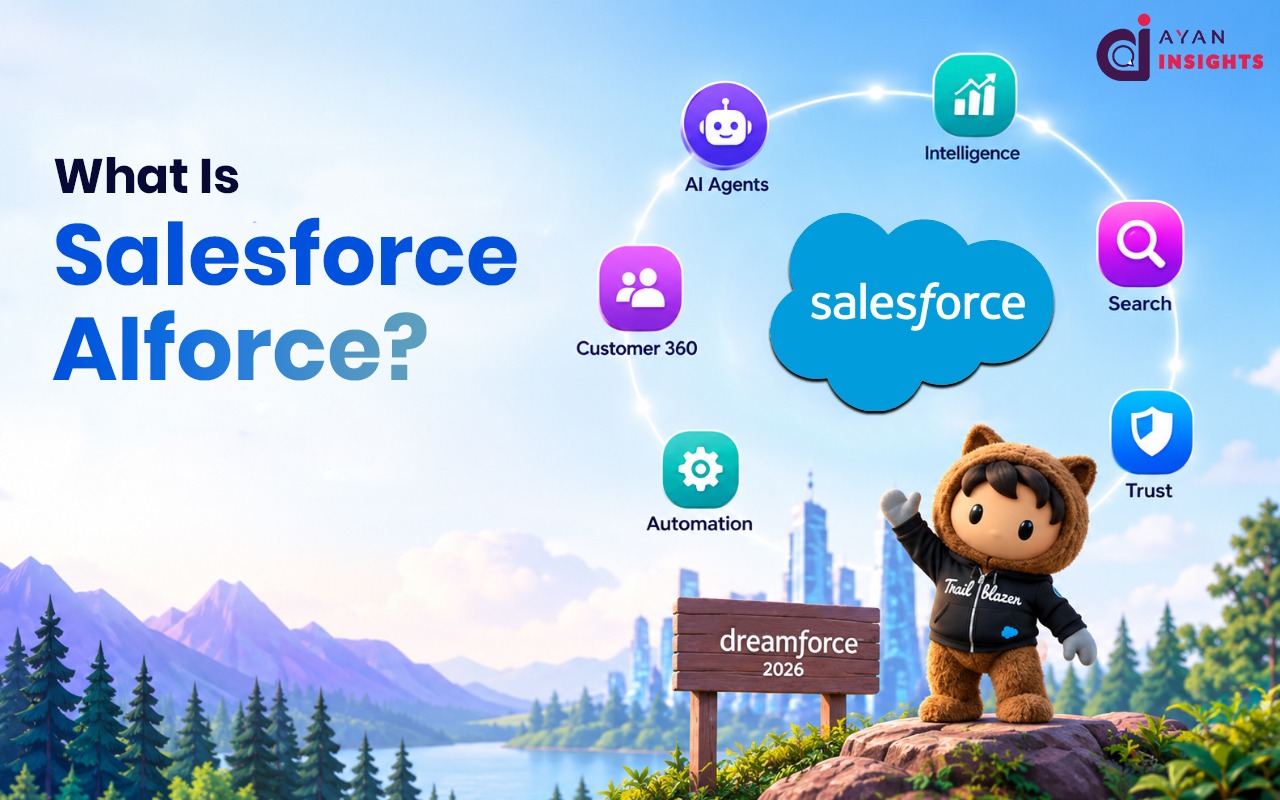
The Agentforce AI agents symbolizes Salesforce’s vision of autonomous agents. Integrating external data has become a cornerstone for effective AI-driven systems. As a Salesforce Architect, I’ve seen how connecting the right data sources to an AI platform can make all the difference.
Salesforce’s Agentforce, built as “the agentic layer of the Salesforce platform” is designed to work with your existing apps, data, and business logic. By feeding it external CRM data, legacy systems, and knowledge bases, companies make their AI much smarter from day one. For example, connecting an external product catalog or FAQ database to Agentforce immediately enriches the agent’s knowledge and response accuracy.