A Salesforce developer wakes up thinking about VS Code, spends the afternoon wrestling with VS Code over something else entirely, and goes to bed not entirely sure if that last change was actually pulled or pushed. Somewhere in between, an org update actually happens.
Every Salesforce developer has a version of the same morning.
You open your laptop, pull up VS Code, wait for the Salesforce Extension Pack to load, run an org authentication command, wait for the metadata to sync, and only then — ten or fifteen minutes in — do you actually start writing code. If you’re debugging something urgent in a sandbox, you might skip all that and open the Developer Console instead, where you’re greeted by a UI that hasn’t meaningfully changed in years.
This is normal. It’s also, when you step back and look at it, a lot of overhead for what should be a simple task: writing and managing code inside an org.
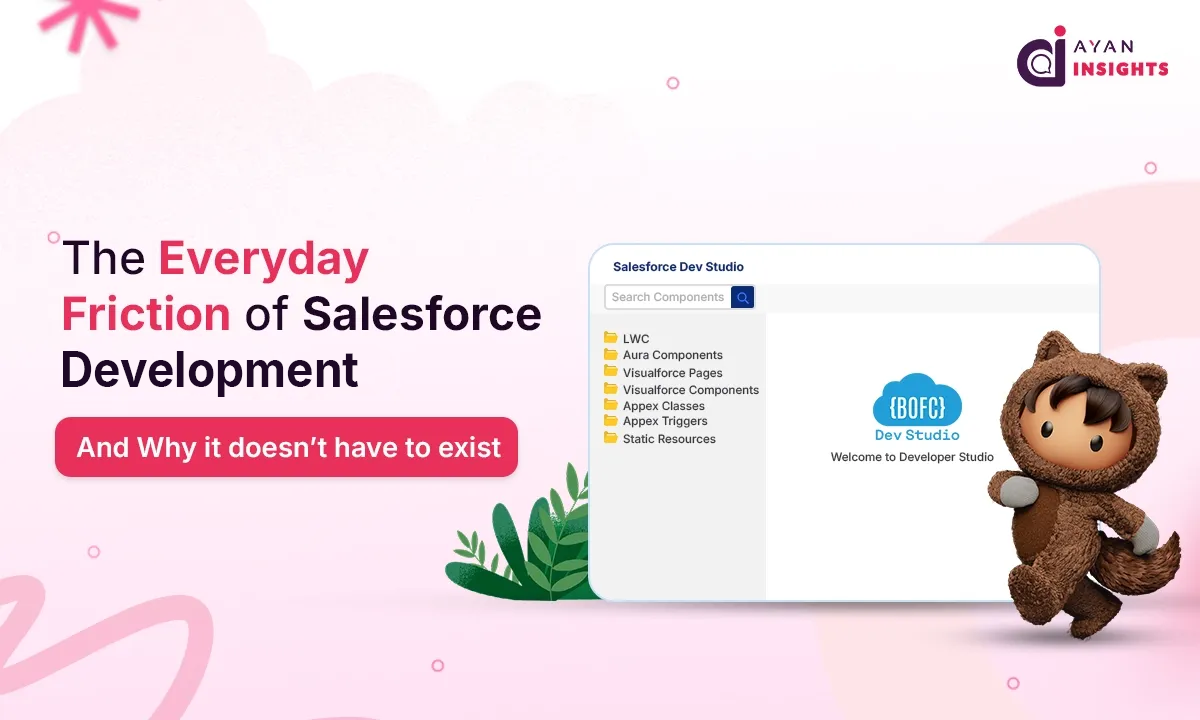
This article looks at the specific friction points Salesforce developers deal with on a daily basis, and how a newer approach — an IDE built natively inside the platform — changes the equation.